
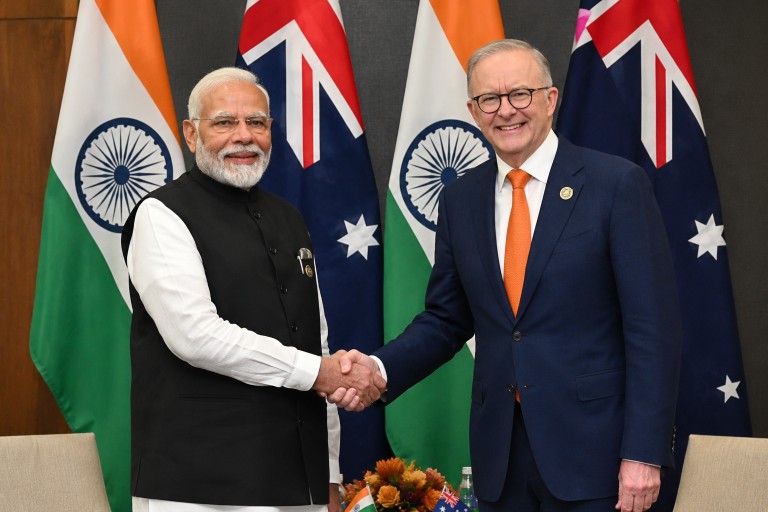
India and Australia have finalized a significant uranium supply agreement to bolster their bilateral relations and support India’s burgeoning nuclear energy sector for peaceful applications. This landmark accord aims to streamline the export of uranium from Australia to India, a move that seeks to resolve previous delays following an initial trade pact inked in 2014. The revised arrangement is pivotal in aligning with India’s ambitions for expanding its clean energy capacity, while ensuring that the uranium is dedicated solely to civilian nuclear power generation.
In his remarks following the signing of the agreement, Indian Prime Minister Narendra Modi hailed it as a crucial advancement in boosting India’s nuclear energy potential. He underscored the critical role of India-Australia cooperation in fostering peace, stability, and adherence to a rules-based order in the Indo-Pacific region. The agreement is seen as a testament to the strong partnership between the two nations, which extends beyond energy to encompass broader strategic interests.
Australian Prime Minister Anthony Albanese expressed optimism about the deal, highlighting its potential to unlock new opportunities for Australia’s resource sector while fortifying the economic and strategic bonds between the two countries. He remarked that the bilateral relationship has experienced considerable growth in recent years, fueled by heightened political engagement and expanded collaborative efforts.
Alongside the uranium supply agreement, both leaders reiterated their dedication to enhancing defense and security cooperation, agreeing to intensify discussions on developments that influence shared interests in the Indo-Pacific region. This aspect of their partnership underscores a mutual commitment to addressing regional challenges collaboratively.
During his visit, Prime Minister Modi is also expected to address a substantial gathering of the Indian-Australian community, emphasizing the robust people-to-people connections that further cement the ties between India and Australia. This engagement reflects the cultural and social dimensions that complement the strategic and economic aspects of the bilateral relationship.