
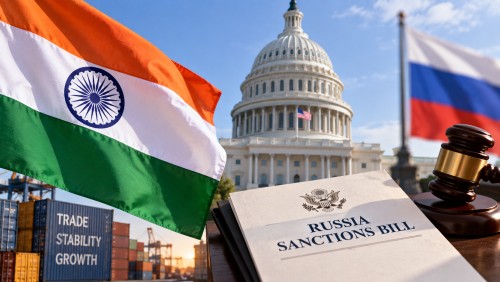
India has vowed to safeguard its trade and economic interests following the U.S. House of Representatives’ approval of a sanctions bill that could significantly impact countries importing Russian oil. The Lindsey O. Graham Sanctioning Russia and Iran Act of 2026, passed with a 262-159 vote, proposes tariffs of up to 100% on nations that maintain substantial energy trade with Russia, including India, China, Slovakia, Hungary, and Azerbaijan.
In response to the potential economic repercussions, India’s Ministry of External Affairs stated its commitment to ensuring energy security for its population of 1.4 billion. The ministry emphasized its strategy to continue relying on a diversified mix of energy sources, adapting to market changes as necessary. It has engaged in discussions with U.S. officials at senior levels to address the challenges posed by the proposed legislation.
To mitigate risks, India has been expanding its energy sources, increasing imports from countries such as the United States and Venezuela, while Russia remains a key supplier of crude oil. The Indian government is also collaborating with local trade and industry bodies to address the possible economic impacts of the sanctions.
The bill, having cleared the U.S. Senate, now awaits presidential approval to become law. Should it be enacted, the tariffs could complicate trade relations between India and the United States and stir concerns in global energy markets.