The recent imposition of a staggering $100,000 fee on H-1B work visas, which disproportionately affects Indian engineers, can now be seen as a prelude to President Donald Trump’s broader, more aggressive stance against India, which culminated in his hostile speech at the UN General Assembly.
The visa fee hike, which caused outrage in India and led to taunts about Prime Minister Modi’s “friendship” with Trump, was an early indicator of the administration’s willingness to enact punitive measures against Indian interests. It demonstrated that the “bonhomie” between the leaders would not prevent policies perceived as harmful to India.
Trump’s UN speech followed the same pattern but on a much larger and more significant scale. He moved from a specific economic policy (visas) to a fundamental critique of India’s foreign policy and global role. His accusations—that India is funding the Ukraine war and his disputed claim of stopping an India-Pakistan war—represent a much deeper and more comprehensive assault.
Both the H-1B fee and the UN speech are rooted in the same transactional, “America First” worldview. The visa fee is designed to protect American jobs, while the pressure on India over Russian oil is designed to achieve an American foreign policy objective. In both cases, Indian interests are secondary.
Seen in this context, the UN attack was not a sudden turn but an escalation of a pre-existing trend. The visa fee was a warning shot; the UN speech was a full broadside, signaling that the Trump administration is prepared to use multiple levers of pressure—economic, diplomatic, and rhetorical—to force India to comply with its agenda.
The $100,000 H-1B Fee: A Prelude to Trump’s Broader Attack on India
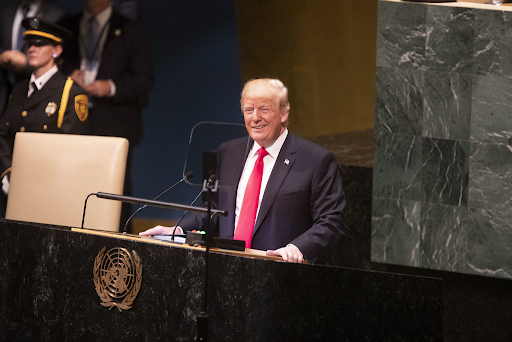
Picture Credit: www.flickr.com
104