
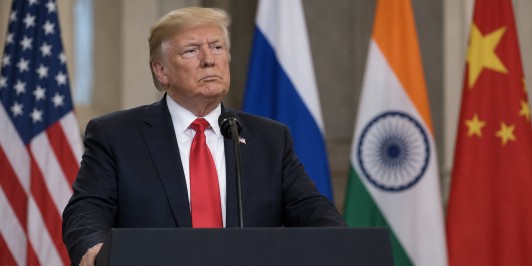
President Donald Trump has signaled a potential use of newly acquired tariff powers to pressure Russia into ending its war in Ukraine, a move that could impact major buyers of Russian energy such as India and China. This development follows Trump’s signing of the Lindsey O. Graham Sanctioning Russia and Iran Act of 2026 into law last week, which grants the U.S. president authority to impose tariffs of up to 100% on nations purchasing Russian oil and natural gas.
Speaking at the United Nations General Assembly, Trump emphasized the new law’s provision for significant tariff authority, stating he would employ these measures if deemed necessary to facilitate a resolution to the ongoing conflict. He underscored the importance of ending the fighting in Ukraine, aligning with continued U.S. efforts to bring Russia to the negotiating table.
The legislation not only targets Russian energy exports but also introduces a range of sanctions against Russian officials, financial institutions, and networks accused of aiding Moscow in circumventing existing restrictions. This comprehensive approach aims to increase economic pressure on Russia while supporting Ukraine in its quest for peace.
While the law grants the president the discretion to decide whether to apply the 100% tariffs on India and China, it does not automatically enforce these measures. As two of the largest buyers of Russian energy, the potential imposition of tariffs could significantly impact their economies, depending on future U.S. actions.
Ukrainian President Volodymyr Zelenskyy has expressed support for the new sanctions, indicating his readiness for further discussions to bring an end to the conflict. The international community continues to watch closely as diplomatic efforts unfold amidst heightened economic tensions.