
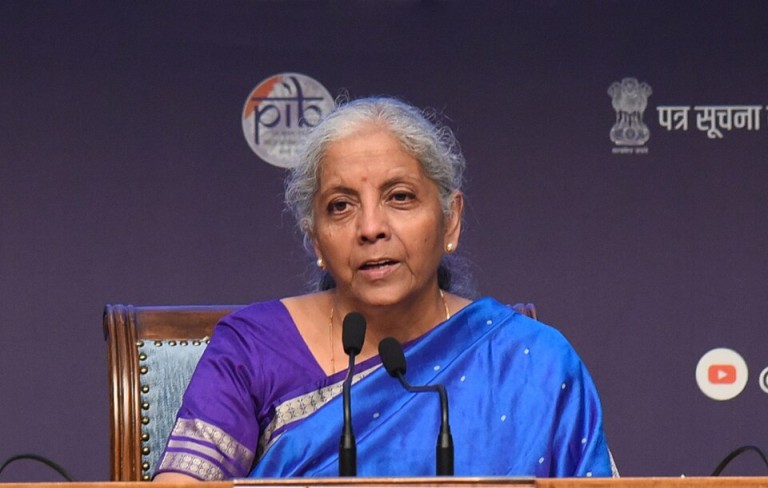
The Indian government is vigilantly observing the repercussions of the ongoing crisis in West Asia on the nation’s economy, with a particular focus on fuel, fertilizers, and foreign exchange reserves, Union Finance Minister Nirmala Sitharaman has stated. Speaking during an event commemorating the anniversary of the Small Industries Development Bank of India, Sitharaman highlighted the rising costs of crude oil and fertilizers as significant concerns impacting the economic landscape. She also mentioned the upward trend in gold prices as an additional strain on the economy.
Despite these external pressures, the finance minister assured that India’s economic fundamentals remain robust. She cautioned against panic and warned that “fearmongering” is not advisable during these globally uncertain times. Emphasizing the external nature of many of the economic challenges, Sitharaman called for maintaining public trust through prudent policy-making and effective communication.
In response to the current economic situation, the government recently reduced the excise duty on petrol and diesel, a decision Sitharaman noted would result in a revenue loss of nearly ₹1 lakh crore. However, she justified this move as necessary to alleviate consumer pressure. Additionally, she expressed concern over the delayed payments to micro, small, and medium enterprises (MSMEs), revealing that approximately ₹8.1 lakh crore is stuck in pending dues. The finance minister urged public sector entities to adhere to the mandated 45-day timeline for clearing MSME payments.
India is also grappling with potential disruptions to its imports of petroleum products and fertilizers due to the escalating tensions around the Strait of Hormuz, a critical global shipping route. The recent weeks have seen a sharp rise in fuel prices, with state-run oil companies increasing the prices of petrol and diesel again on Monday. Since mid-May, these prices have surged by more than ₹7 per litre, reflecting the broader impact of the global scenario.
Earlier, Prime Minister Narendra Modi advised citizens to exercise caution in their spending and to avoid non-essential purchases, amid the growing global economic uncertainties linked to the West Asia conflict. His call for prudence underscores the government’s efforts to navigate the economic challenges posed by the geopolitical tensions.